St. John's "Post Oak"
Lutheran Church
Campbell Hill, Jackson County, Illinois
Photographs
Five photographs spanning the life of the present building — from dedication day in 1905 through the mid-twentieth century — preserving the faces, furnishings, and occasions of the congregation at Post Oak.
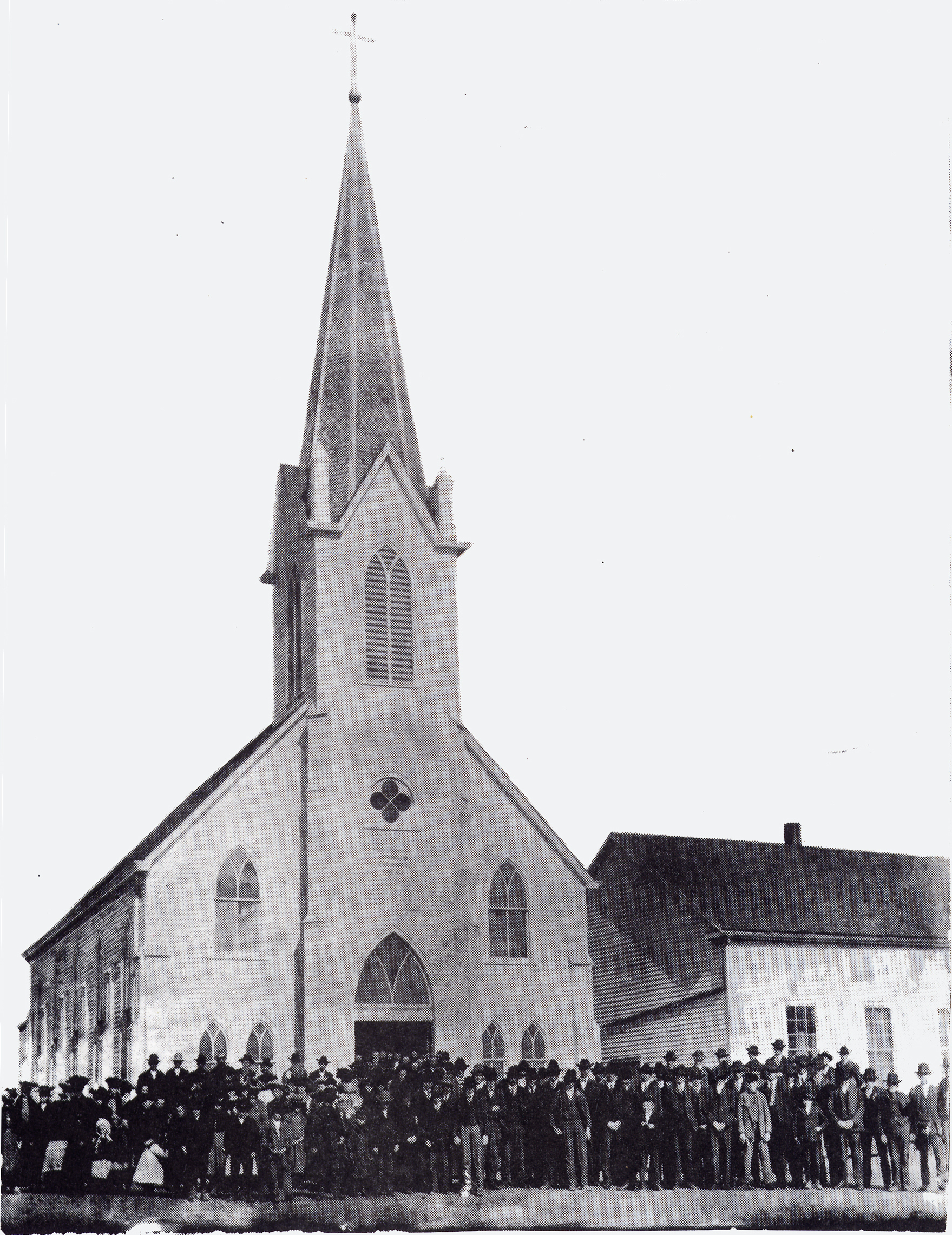
The congregation — and much of the surrounding community — gathers before the newly completed church on the day of its dedication. The history records that some three thousand people attended the service. The cornerstone had been laid just four months earlier, on 5 June 1905. To the left stands the original 1873 building that had served simultaneously as church and schoolhouse for thirty-one years; it would soon be removed. The new building is oriented north to south, its entrance facing the road, as it stands today.
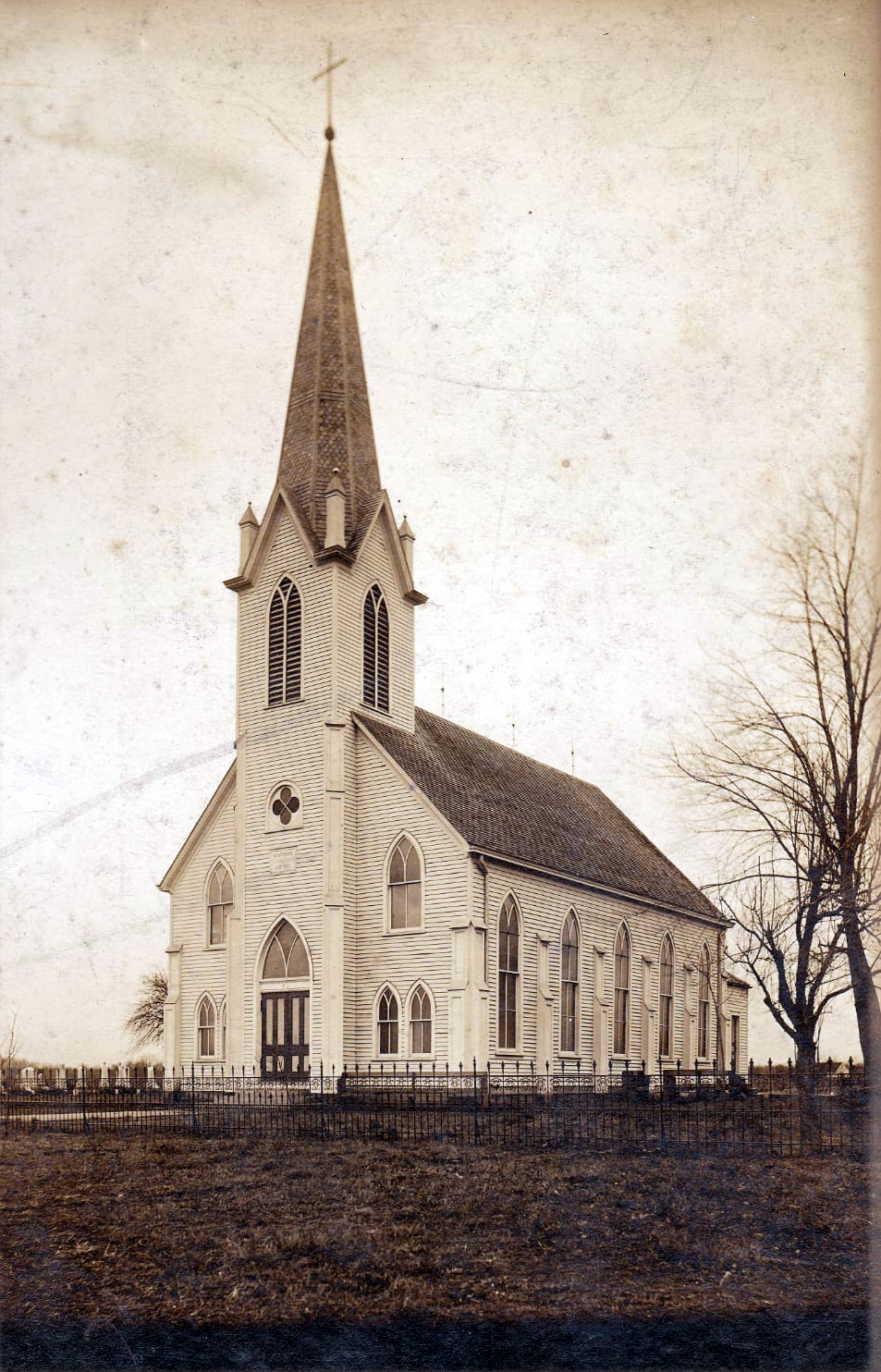
A formal photographer showing the church shortly after its completion. The iron fence enclosing the cemetery grounds is visible at the base of the rise, and the bare trees suggest a late-autumn sitting. The Gothic lancet windows, quatrefoil oculus, and needle spire topped with a cross are all clearly rendered. This is almost certainly the earliest surviving solo exterior photograph of the present building.
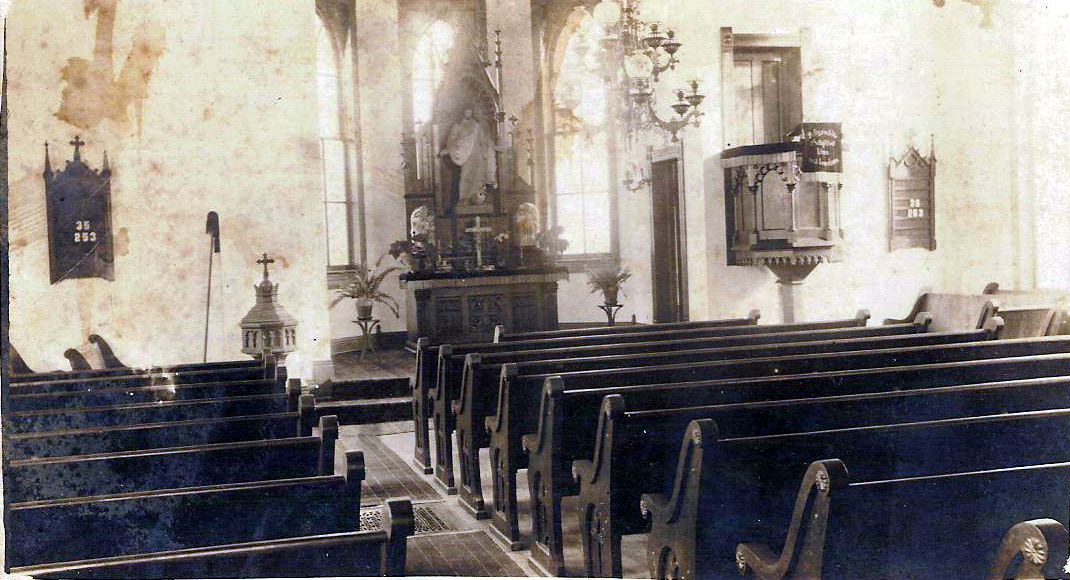
An early view of the sanctuary, probably taken within a decade of the 1905 dedication. The original dark-stained pews and woodwork are in their first finish; hymn-board frames flank the nave; a gas or early electric chandelier hangs from the ceiling. The pulpit — prominently placed to the right of center in the Lutheran preaching tradition — bears an inscription no longer legible at this resolution. The altar retable features a standing Christ figure beneath a Gothic canopy, consistent with the furnishings installed at dedication.
The Mid-Twentieth Century Sanctuary
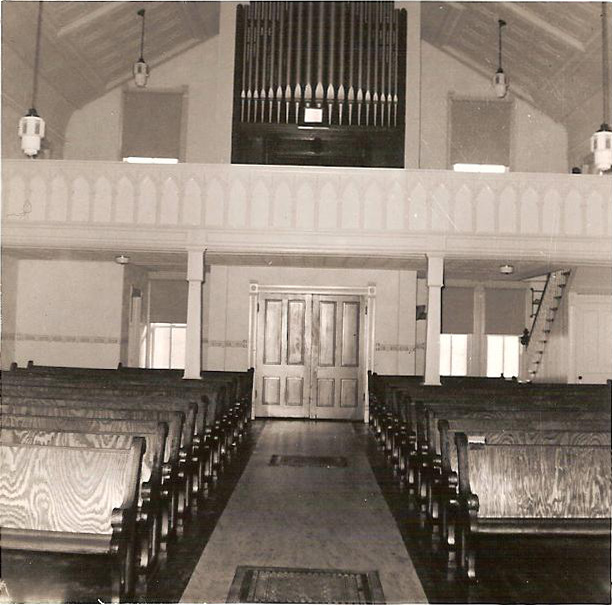
Looking from the chancel toward the entrance, the pipe organ occupies the loft above the balcony, whose Gothic-arched railing echoes the lancet windows of the exterior. Pendant globe lights illuminate the nave. A staircase to the balcony is visible at the right. The pews have been refinished lighter than in the earliest interior photograph.
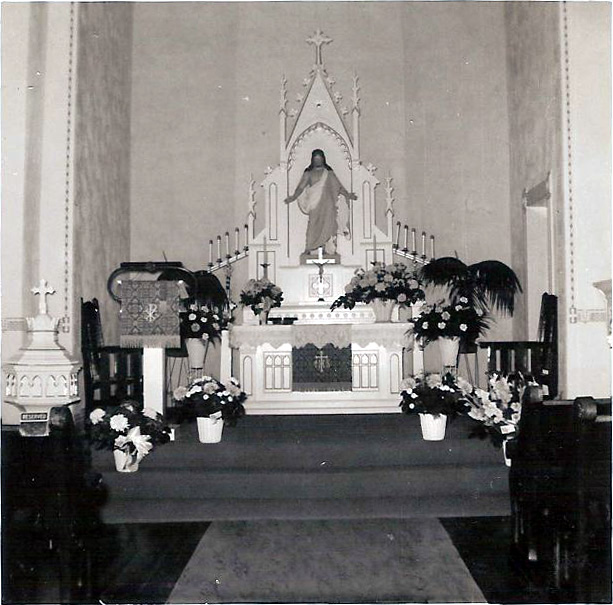
The chancel dressed abundantly with flowers — likely Easter or a wedding. The white-painted reredos with its Christ figure and branched candelabras replaced the original darker furnishings sometime in the mid-century. A "Reserved" sign on the front pew suggests an expected gathering of family or dignitaries.
The Mid-Twentieth Century Sanctuary
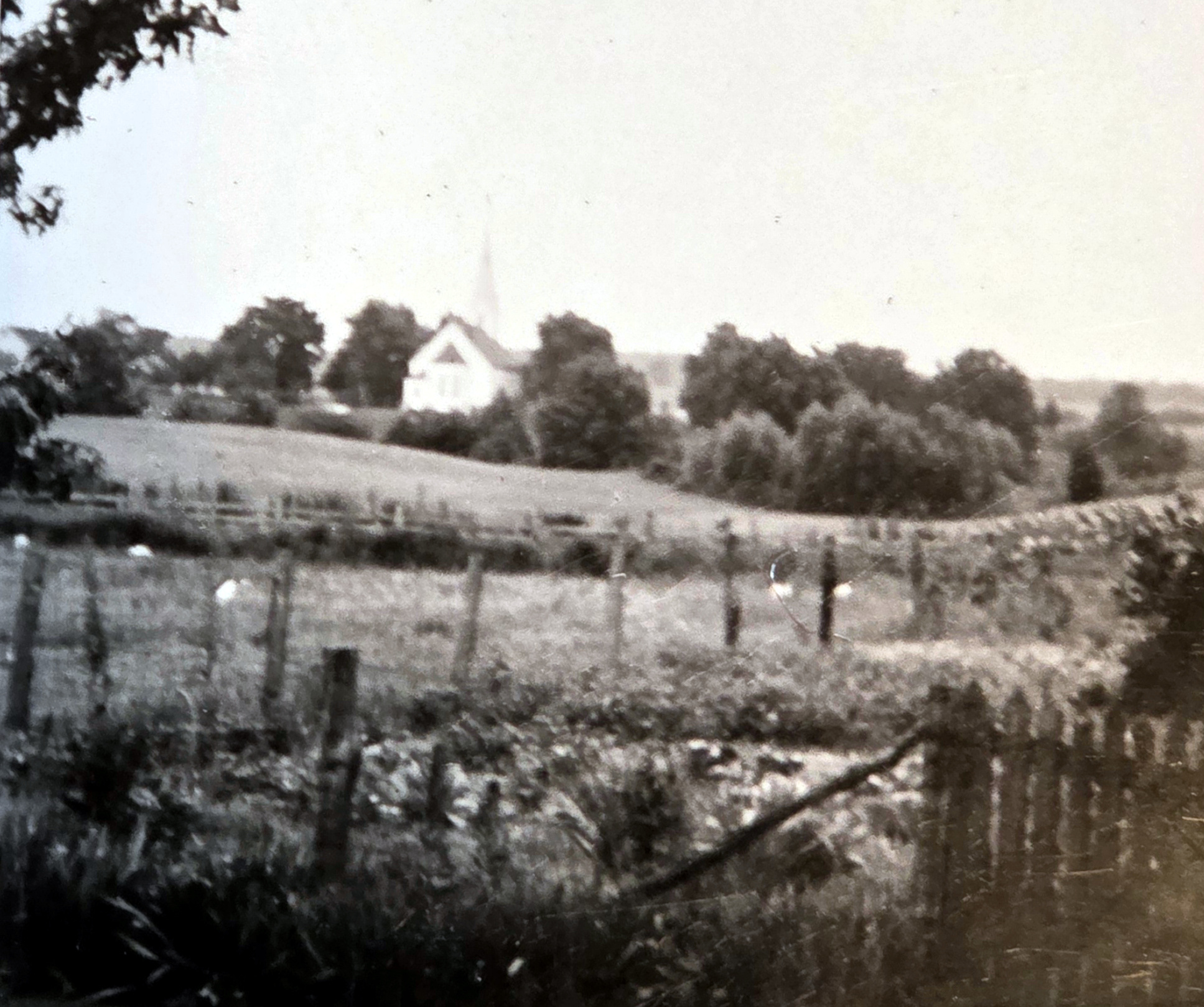
View looking south from my grandparent's farm (originally the Schutte farm) looking up the hill to Post Oak Church.
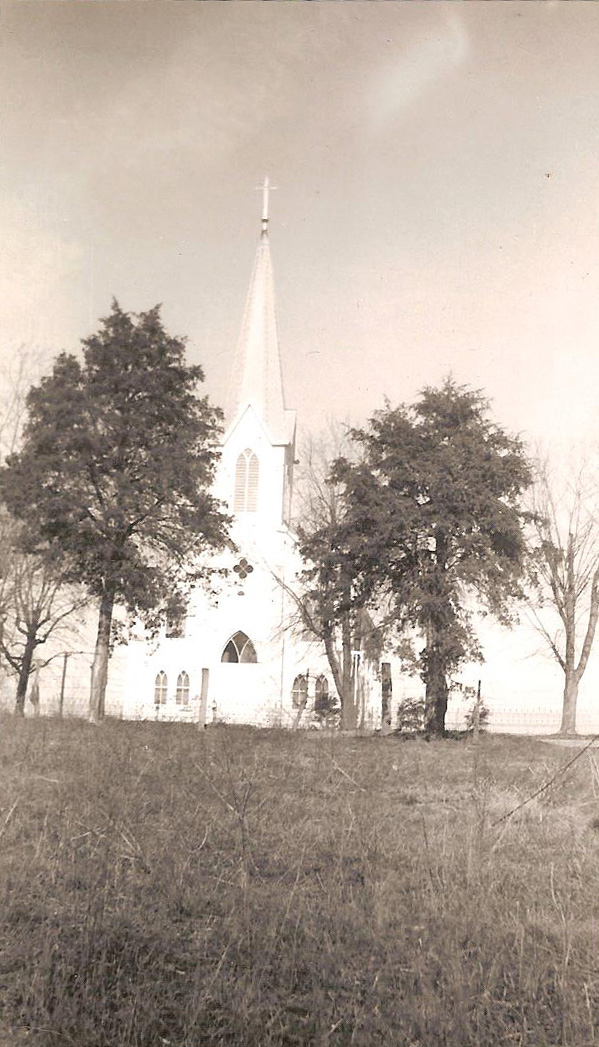
Another view of the church.